Wednesday, September 07, 2022

A Pdf Babel

There are so many books and yet, so little time.

That could do. If I knew you understood that feeling, I could end the post here.

I have more than enough downloaded books to read. That does not stop me from finding an ever-increasing list of alluring titles to download. 

My mind feels something itching at the sight of my pdf collection.
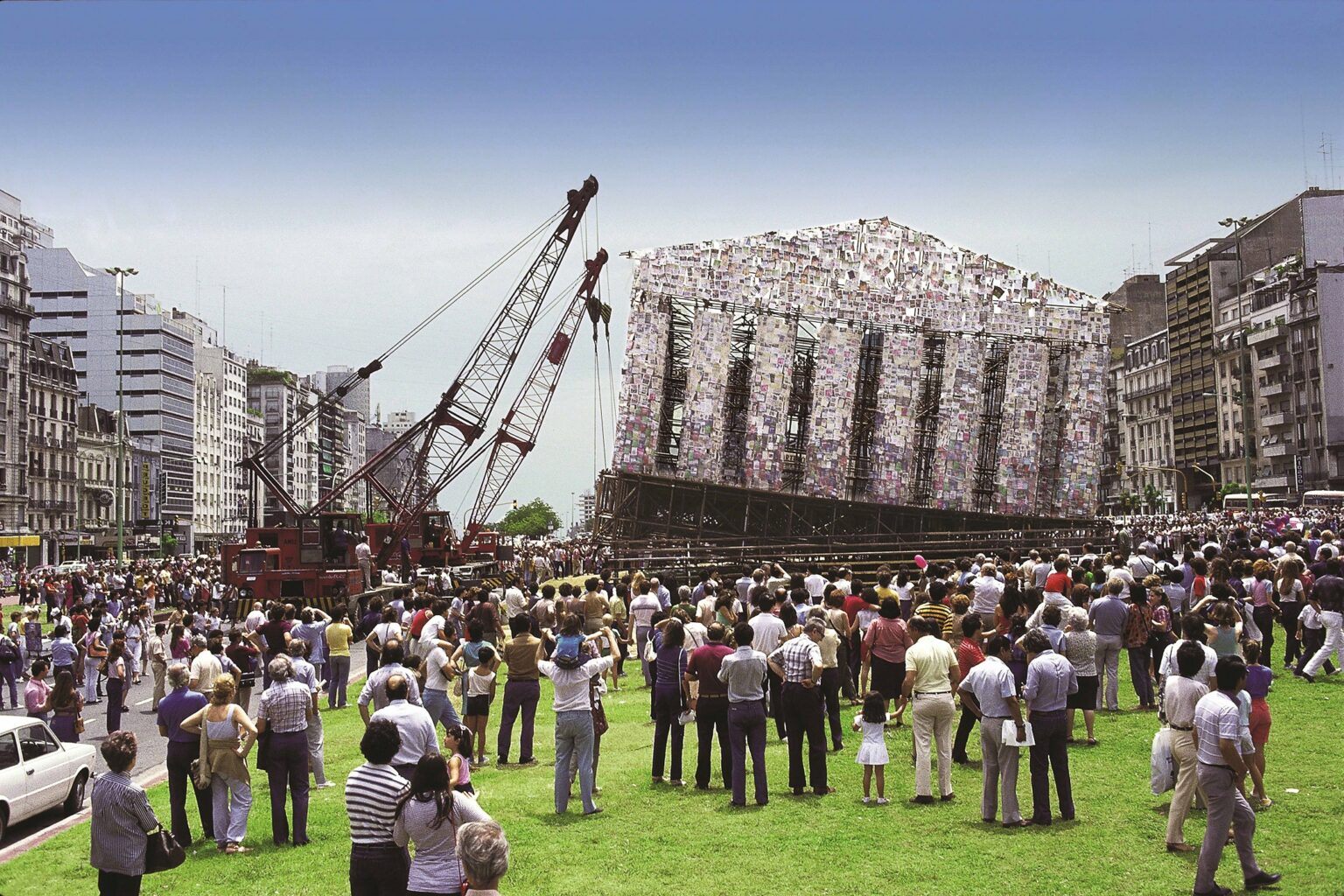


My reading habits have radically changed. Years of hopscotching among blogs that lead to a link to yet another land of online interestingness have drawn new reading routes. When it comes to books in any format, fictional or other, the number of pages I read per day has diminished considerably. How many books can read in a year? How to select them? How many days do I need to finish an average 300-page book? 

If I did the math -no, I won't- I am fairly certain the remain of my lifetime will not be enough to read those books. A daunting fact.

Borges, aware of his old age, once wrote that he came to the hard realisation that there were books on his shelves that he would not open again. Ever.

Still. I download books. 

What do I look for there? Why persist in a futile attempt, when I know I cannot read it all?

Maybe it's the thirst for answering difficult life questions. Finding a few answers reinforces addictive pleasure circuits in your brain.

Maybe it's the configuration of my learner mind -with a thousand atomised interests that need to be satisfied.

Perhaps the answer is something far simpler and deeply engraved in ourselves. 

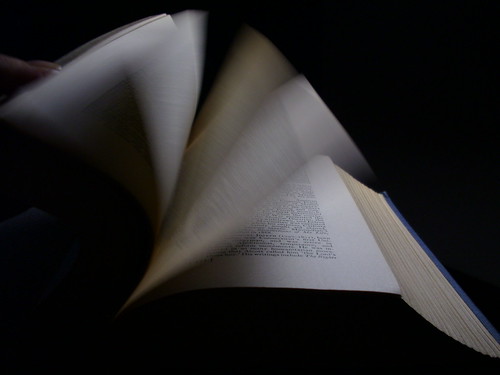
Just like that intermediate zone of light and shadows that occurs briefly before dawn -or when you write a blog post-, I can now take a glimpse at the root of my thirst for books and see that what actually lies there is a sense of hope. It is simply human to hope beyond your lifetime. Because in spite of all the negative news being flung at us on a daily basis, beyond the painful gradual loss of a family member health or the overwhelming reality of a not too distant war, you would still plant that proverbial tree and take your book to cuddle up under it and feed on a fruitful, soul nourishing, human-scale hope.


Labels: ,

Friday, February 01, 2019

Larger than a note: an augmented attempt

I have been invited by Gardner Campbell to join him in an annotating project which will bring together students, scholars and scientists to look deeper into Doug Engelbart's research report Augmenting Human Intellect: A Conceptual Framework (1962). I am humbled and honoured to join them. I am also curious and excited about this open-ended learning experience.

As I try to learn more about the project, I thought it would be a good start to drop some notes here about my questions, fledgeling thoughts and links as I embark in a new inspiring online journey. Mind you, I am not planning to be organised. I just attempt to gather enough stepping stones to cross a river into an unknown text for me. In my years as a teacher of English as a Foreign Language and a Translator trainee, I had not heard of Doug Engelbart.

So the questions come along: Who is he? Why is he so important? Why does it matter to go back to a text written in 1962? How does his research relate to languages? How can I relate to this study field and work?

According to Wikipedia, Douglas Engelbart (1925-2013) was an internet pioneer who studied in the field of human computer interaction (HCI). He engineered his way to invent the computer mouse and hypertext. In 1968,  while working for the Stanford Research Institute (SRI), he made a demonstration of visionary impact, which came to be known as The Mother of All Demos.

At this point of hyperlinked, fragmentary reading, I get the feeling Doug was probably a born-teacher.

Prior to exploring links, the first thing I did before accepting the invitation was to plunge directly into Doug's original 1962 text. I had to go down several paragraphs before I sensed the text had something old in it. It was the mention of a typewriter that had a sudden time travelling effect. For the most part, you would not guess it was written over half a century ago.

My first impression was that it is kind of difficult to read. Or perhaps it is the way Doug tries to address an audience and guide them into his matrix. I do not think there were EFL teachers there. They were probably busy getting organised as TESOL in 1966.

I learn from Gardner's conversation with Christina, Doug's daughter, that his father wrote in isolation:

"It’s never easy to sum up a decade’s worth of thought, especially when that thought has seemed dangerous to utter."

Reading on, Gardner reflects on the nature of the text's difficulty:

"But now it’s time for a confession. When folks ask me if I, too, find the essay difficult, I usually mumble some kind of assent out of fellow feeling. Yes, I do find it a challenging piece of writing—but no more so than Milton, or Shakespeare, or Woolf, or Faulkner, or Joyce. In fact, in its complexity and playfulness, “Augmenting Human Intellect” resonates with me very strongly as a work of art, even a work of philosophy. I can’t claim to have gotten to the bottom of it. Perhaps I never will. Art is like that."

Beautifully expressed. It rules out any giving up on reading on.

I know Gardner expects my educator's insights in my annotating contributions. Yet, at this first stage to approach Doug Engelbart's voice, I rely solely on my translation instrumental reading skills. I remember my Scientific Translation teacher now. Many times you must translate a couple of paragraphs from a field you know nothing about and must achieve understanding and accurate expression in another language in a limited time. You needn't be a medical doctor to translate one, but you must interpret and speak at the same level. We complained about difficulty, of course. How could we decipher the original written by an expert not even writing in his mother tongue? She always answered:

"It is just text."

You grab that flag and march on.

Labels: , , , ,

Sunday, April 24, 2011

It's a Flickering World

The world is small indeed and Flickr can make it seem a small village. Early this month, someone in Austria emailed me with a republishing permission request for this picture:

Thumbed

http://www.flickr.com/photos/79066620@N00/5558170700

Thumbed
The picture has recently been publised in a students' magazine called JAWS (journalists, artists, writers, students). You can see a taste of it here. Quite inspiring for any ESL or EFL writing class.

Mina, the magazine editor, was kind enough to send me a pdf with the article my picture illustrates. There I found a teacher's voice who could be someone working next to me.

Susanne Kopf writes:

"Another means of transportation, which helped me up my reading was the train. Having family and sometimes even visiting friends in a different city is a great motivation to go there. One train ride usually took about 3,5 hours, the equivalent of a third of a book."(1)

That's about the length of my train journey to visit my family. That's how I got most of my reading done while commuting daily to study in Buenos Aires a long time ago.

It goes on...

"Sometimes the line between private and school reading was blurred by me realizing that a book I had ordered just for fun actually fit a course I was taking. This should have thrilled me, as it meant that what I enjoyed doing just for myself was also valuable academically. " (1)

Blurring the lines. That's it. Borges in his prologue to Borges Profesor argued that 'obligatory reading' was a nonsense phrase. How could you obligatorily enjoy reading? (Quote source in Spanish)

Lots of coincidences with Mina as a node in the connection. She had no idea the picture in Flickr had been taken by an English language teacher. Mina works for a magazine which belongs to the English and American Studies Department of the Karl Franzens-Universität at an Austrian university.

What Mina doesn't know yet is what the book in the picture is about:


If there were any more coincidences that linked us, I would not be surprised. Perhaps this post reaches Susanne? I sense this story may have a sequel. For now, I just enjoy to see what these connections through our published content can lead to. As I wrote in my Flickr profile, take me wherever you are.


(1)
My Semester of Reading by Susanne Kopf. JAWS Magazine, KF University Graz. Issue 21, pages 20-21. April 2011.

Labels: , , , , ,

Links

Meta

Visits since July 2006:

Copyright ©2006-2025. Claudia Ceraso. All rights reserved.
  • My Blogger Profile
  • Subscribe to this blog's feed
    [What is this?]